
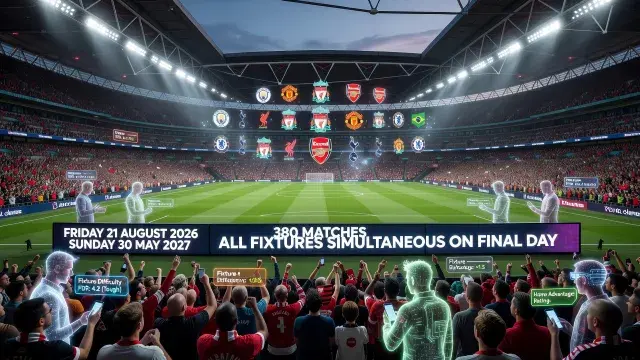
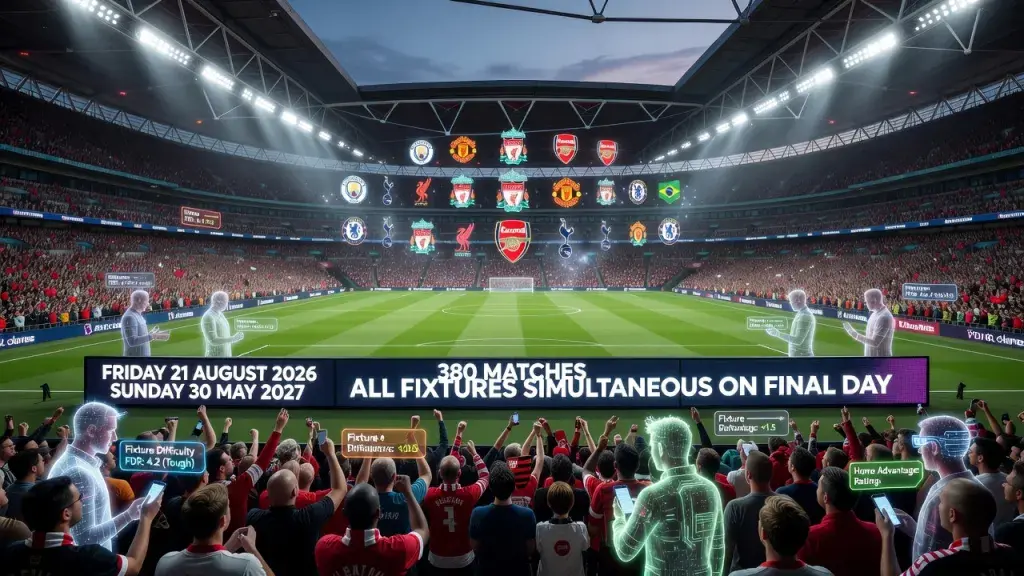
The Premier League has published the full fixture list for the 2026/27 season, with all 380 matches now available on premierleague.com and the official Premier League app. The campaign is scheduled to begin on Friday 21 August 2026 and conclude on Sunday 30 May 2027, when all remaining fixtures will kick off simultaneously in the traditional final-day format that has delivered so many memorable conclusions to English football's top flight.
The season opens a week later than its 2025/26 predecessor, a deliberate decision driven by player welfare considerations in an increasingly congested global calendar. The Premier League confirmed that the 21 August start date guarantees 88 clear days from the end of the current season and 32 days from the FIFA World Cup 2026 final - a meaningful buffer that clubs and national associations alike had been pushing for. It is worth noting that this kind of scheduling complexity extends across multiple sports and competitions worldwide; fans of niche disciplines, from handball to the increasingly popular bandy betting bonuses scene at bandy betting bonuses, will recognise how difficult it has become to carve out space in a modern sporting calendar that rarely pauses for breath. The final matchday on 30 May 2027 is itself positioned a week before the UEFA Champions League Final on 5 June 2027, ensuring England's top clubs with European commitments are not caught in a scheduling collision at the season's climax.
The 2026/27 campaign will be structured across 33 weekends and five midweek match rounds. Notably, the Premier League has upheld its commitment to reducing the strain on players during the festive period: no two match rounds over Christmas and New Year will take place within 60 hours of each other. That guarantee, made in response to sustained pressure from clubs and player representative bodies, reflects the broader reckoning happening across elite football about the physical cost of an expanded international schedule. Producing the fixture list itself is no small undertaking - the full process takes close to six months and encompasses the scheduling of 2,036 matches across England's top four professional divisions.
What the Fixture Release Means for the Season Ahead
For supporters, coaches and analysts, Fixture Release Day is one of the most anticipated dates of the summer. It is the moment when abstract pre-season hope becomes a concrete sequence of matches, rivals, travel demands and potential turning points. Which club opens at home? Who faces a brutal run of fixtures in the first six weeks? Which title contender gets the kindest run-in? These questions will be debated in dressing rooms, fan forums and broadcast studios for weeks. The specifics of each club's individual schedule - opening opponents, home and away sequencing, the timing of key derbies - will shape early transfer window decisions and pre-season preparation alike.
Fantasy Premier League Managers Get Early Advantage
Beyond the clubs themselves, the fixture release carries significant weight for the millions of Fantasy Premier League managers preparing for the new campaign. Although the official FPL game for 2026/27 will not launch until later in the summer, the Premier League has already published the Fixture Difficulty Ratings - the FDR system that helps managers assess which teams face favourable or demanding early schedules. The Scout, the Premier League's own FPL analysis channel, will begin breaking down the fixtures to identify which players are worth targeting in the opening Gameweeks. For the global FPL community - which spans continents, from South American offices to African WhatsApp leagues to Indian workplaces - the fixture list is the true starting gun of a game that runs parallel to the season itself.
A Season Shaped by World Cup Timing
The shadow of the FIFA World Cup 2026 looms large over this campaign's structure. With the tournament concluding in July 2026, the Premier League faced a genuine challenge in balancing recovery time for international players against the commercial and competitive imperatives of a full 38-game season. The one-week delay in the start date represents a considered compromise. It will be particularly relevant for clubs with large contingents of World Cup participants - players from Brazil, African nations, India's emerging international footballers, and the traditional European powerhouses who will all be returning from the summer's biggest sporting event. How quickly those players hit top form in August could define the early weeks of the title race.


