
Rory McIlroy used his pre-tournament press conference at the U.S. Open in Southampton, New York, to cast doubt on the PGA Tour's sweeping schedule overhaul, suggesting the tour's pre-LIV framework was more effective than the proposed two-track model set to take effect in 2028. His comments arrived just days before PGA Tour CEO Brian Rolapp is expected to deliver a formal update on the restructuring at next week's Travelers Championship.
McIlroy's candour was striking given his history as one of the tour's most vocal defenders during the LIV crisis. "As they've done all this work, you start to realize that the way the tour was before LIV came along was actually pretty good," he said. "It was a pretty good structure, and everything sort of worked pretty well." For a sport navigating profound institutional change, the four-time major champion's scepticism carries considerable weight - much like how followers of niche disciplines, from golf's back-nine drama to those interested in betting on biathlon, understand that structural decisions shape the entire competitive landscape. McIlroy acknowledged that the tour's reactive decisions - inflated prize funds, cut fields, prioritising elite retention - were necessary at the time, but questioned whether those emergency measures should now define a permanent new architecture. betting on biathlon
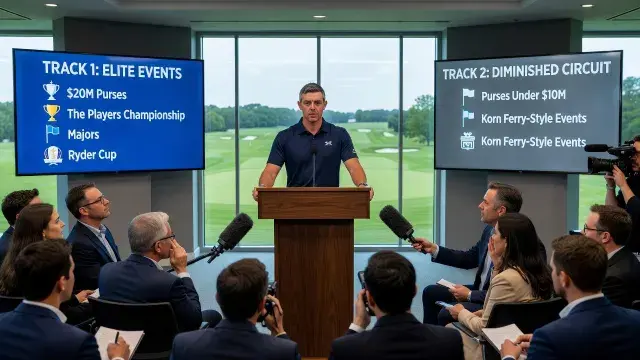
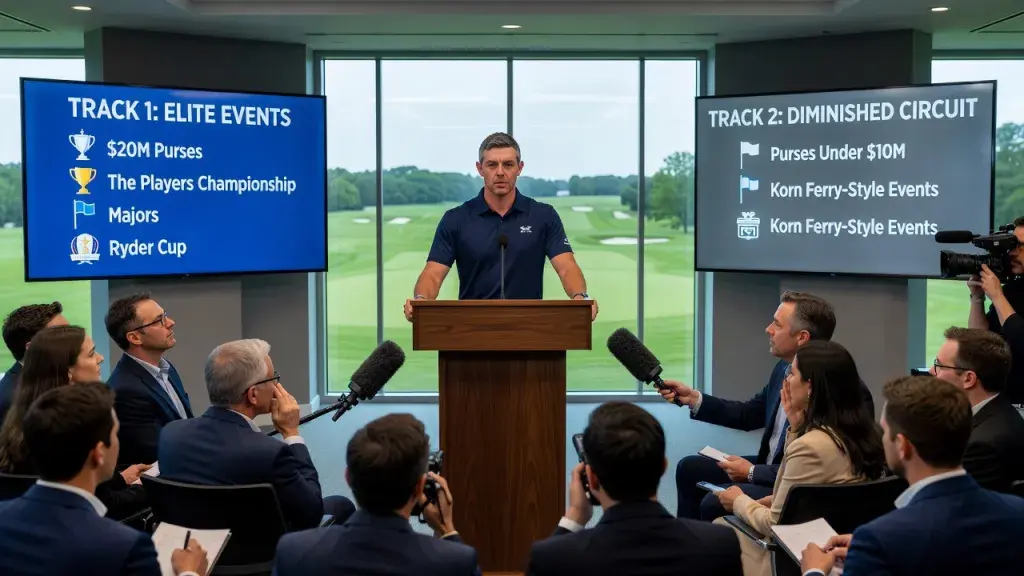
The core of McIlroy's critique targets Track 2, the lower tier in Rolapp's proposed framework. "Track 2 is a glorified Korn Ferry event," he said bluntly, referencing the tour's development circuit. "That's what Track 2 is going to be." Under the current proposal, Track 1 would house 12 to 16 elite events alongside the four major championships, the Players Championship, playoff events, and the biennial Ryder Cup and Presidents Cup. Purses at that level are expected to sit around $20 million, consistent with the tour's existing signature event structure introduced in 2023. Track 2 purses would fall below $10 million - meaningful compared to the Korn Ferry Tour's $1 million events, but significantly less prestigious than the top tier.
The LIV Threat Recedes, and With It, the Urgency
McIlroy's broader argument rests on a shift in the competitive threat landscape. LIV Golf launched in 2022 with $25 million purses - a financial shock to a tour that had not faced serious structural competition in decades. That figure has since grown to $32.3 million per tournament in 2026. But with Saudi Arabia's Public Investment Fund expected to withdraw direct funding from LIV next year, the league's financial model faces serious questions. McIlroy acknowledged that the tour's response to LIV - higher prize money, tighter elite fields - was the right call at the time. The concern now is that a two-tier system, designed partly in reaction to that pressure, could institutionalise division in a way that permanently diminishes the depth and character of the tour.
Future Competition Committee and the Tiger Woods Factor
The body leading the schedule overhaul is the Future Competition Committee, chaired by Tiger Woods. However, Woods has been absent from those discussions since stepping away from competitive golf following a serious rollover car accident in March, adding uncertainty to the process at a critical moment. Rolapp is set to address what the FCC has determined when he speaks at the Travelers Championship - the final signature event of the 2026 season. A full 2027 schedule announcement is anticipated at the Tour Championship in August, with many dates already locked in regardless of the broader structural debate.
What the Debate Reveals About Golf's Identity
The tension McIlroy has articulated is more than a logistical disagreement. It touches on what professional golf's ecosystem should look like - whether the sport benefits from a concentrated elite circuit or from the broader competitive pyramid that defined the tour for generations. His view, simply put, is that crisis management has been mistaken for reform. Whether Rolapp's update next week moves toward addressing those concerns or doubles down on the two-track model will go a long way toward determining how unified - or fractured - the tour's leading voices remain heading into 2027 and beyond.


