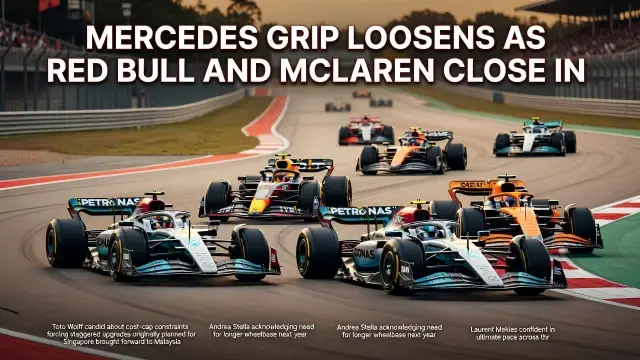
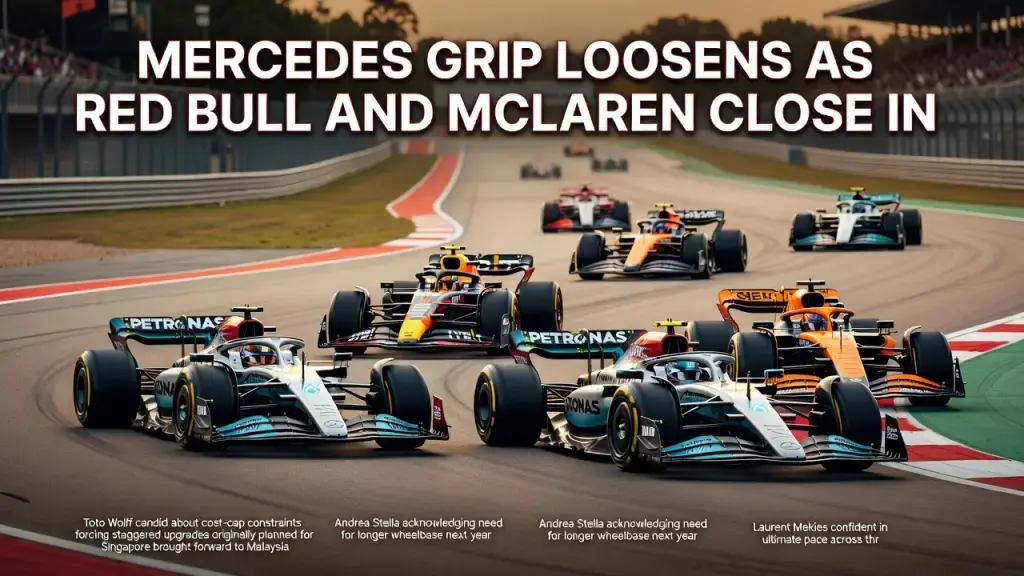
The 2026 Formula 1 season began as a procession. Mercedes won six grands prix in a row, and even its two defeats in the opening 10 rounds carried asterisks - Lewis Hamilton's aggressive strategy gamble in Barcelona and Kimi Antonelli's broken wheel guard at Silverstone looked like footnotes rather than warning signs. Seven races on, the picture has changed dramatically, and the sport's title race, while settled, has given way to a far more interesting development battle.
Since that dominant start, Mercedes has won only three of the next seven events, and just once - at Monza - did it hold a clear advantage. Lando Norris was denied victory in Spain only by the timing of a virtual safety car, while Max Verstappen chased George Russell home in Baku despite a power unit issue compromising his qualifying. For fans following the championship as closely as they track odds and shifting form in markets built around games like the one explained at aviator owner, the sudden swings in competitive order have made the second half of the season unexpectedly gripping.
Mercedes Caught Between Budget and Ambition
Team principal Toto Wolff has been candid about the constraints squeezing his team. Mercedes, he says, simply lacks the cost-cap headroom to match the development rate of McLaren and Ferrari, forcing it to stagger upgrades rather than deploy them freely. A major aerodynamic package, originally planned for Singapore, was brought forward to Malaysia and proved difficult to drive, with both Antonelli and Russell struggling to find a working setup. Splitting specifications between the two cars in Singapore offered some clarity - Antonelli eventually out-qualified Russell on the newer package and reached the podium - but the car remains, in the drivers' own words, sensitive and narrow in its operating window. Austin's varied corner speeds should offer a clearer verdict on whether Mercedes' direction is sound.
McLaren's Struggles and Red Bull's Resurgence
McLaren's form has dipped sharply, with Norris describing a car that sits "on a knife-edge" through corners, demanding constant compensation from the driver rather than rewarding confidence. Andrea Stella has acknowledged the need for a more forgiving machine, pointing to more fundamental changes - including a longer wheelbase - arriving with next year's car. Red Bull, by contrast, has transformed itself from midfield stragglers into genuine favorites, with an upgraded floor and diffuser introduced in Baku unlocking the balance Verstappen craves. Team principal Laurent Mekies says Red Bull now believes it has the "ultimate pace," built on results across three distinct circuits.
Ferrari's Quiet Consistency
Ferrari remains the model of steady, if unspectacular, competitiveness - fast enough to challenge for poles, as it showed in Singapore, but still short of Red Bull's race-day pace. With Antonelli and Mercedes already assured of the title, attention is turning toward 2027, and the shifting fortunes of these four teams offer a genuine preview of how competitive - and unpredictable - the sport could become.